

Author’s Note: This continues my series “How Elections Work,” my effort to combat disinformation, misinformation, lack of information, and lies about how elections work. The goal is to help voters (and the media) understand the full depth of laws and procedures that ensure elections are free and fair. The goal is to ensure that voters (and the media) reject the President’s unfounded claims about how elections work.
A. Proving Citizenship as a Condition of Voting
President Trump continues to press for passage of the SAVE Act that would impose dramatic new restrictions on the conduct of elections in the US.[1] One of the key features would require every voter to prove that he/she is a US citizen before he/she is allowed to register to vote/vote. This is not just a federal issue, however, as voters in Alaska, Arkansas, California, Kansas, South Dakota, and West Virginia will have ballot issues relating to voting by citizens only before them this November.
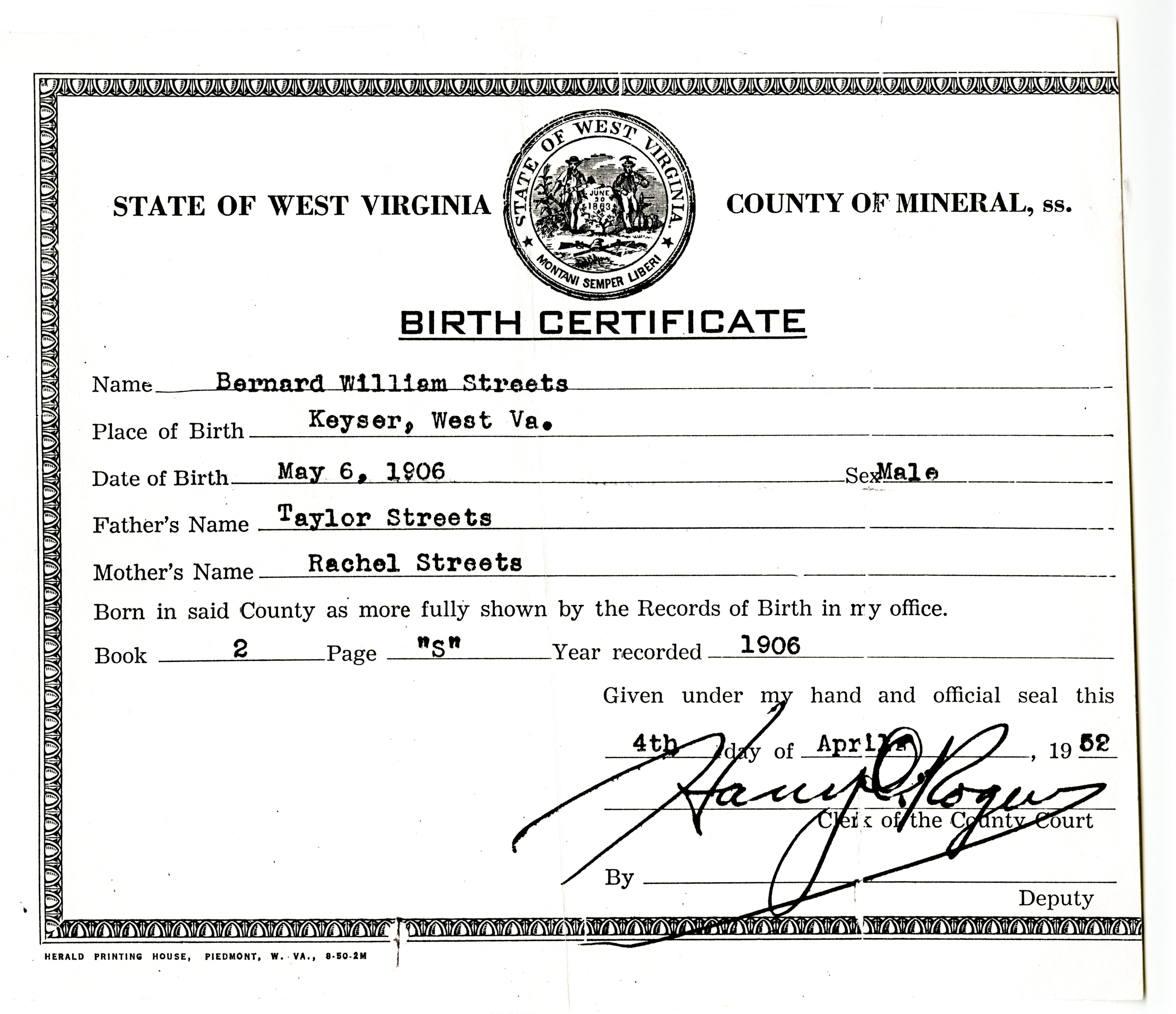
To the surprise of many, proving citizenship as a precondition of voting isn’t an easy matter. To meet that standard, people would be required to show passports or birth certificates as proof of citizenship. According to a recent study by the Center for Democracy and Civic Engagement at the University of Maryland:
Many Americans Of All Political Identities Lack DPOC (Documentary Proof of Citizenship): More research is needed to understand how, if at all, the SAVE Act would impact electoral outcomes. More Democrats reported lacking access to DPOC in our national survey; however, our state level results suggest that the political impact may vary state by state. In our Texas survey, we found more Republicans than Democrats reported not currently having DPOC at all or not being able to easily access DPOC. In our Georgia study, we found roughly even numbers of Democrats and Republicans were impacted.
Laws requiring documentary proof of citizenship to vote could inaccurately remove eligible citizens from the rolls. DPOC laws, such as the proposed federal SAVE Act or the numerous proof of citizenship bills pending in state legislatures, apply not only to new registrants but also to those already registered to vote if their citizenship status is questioned. Voters who move or wish to update their party preference would also need to re-register and be subject to the DPOC requirement.
Over 21.3 million eligible voters (9%) across the country do not have, or do not have easy access to, DPOC.These eligible citizens would be blocked from, or challenged by, needing to provide DPOC to register to vote or stay registered and exercise their fundamental right to have a voice in our democracy.[2]
B. Complications and Costs in Obtaining a Certified Copy of a Birth Certificate
The resources necessary to implement the proof of citizenship requirement (especially in time to affect the November elections) appear to be daunting.
First, one would assume that most people do not have “walk in” access to these records (e.g., at the County Courthouse). Mothers in Wilber, Nebraska (my late father’s hometown) might have delivered their baby at the Crete hospital (10 miles away), the Beatrice one (20 miles away) or one of several in Lincoln, Nebraska (40 miles). Crete is in the same county (Saline), but Beatrice and Lincoln are not (Gage and Lancaster Counties).
A quick check of the Saline County website, however, reveals that there is no “in person” access for birth certificates at the Courthouse.[1] Nor is there any “walk – in” access in Lincoln at the Nebraska Department of Health & Human Services.[2]
It’s logical to conclude, therefore, that most people will use a by mail or online ordering option (probably the latter because it’s faster and allows for tracking of the request). As of mid-March, 45 of the states and the District of Columbia utilize VitalChek to manage their online application process. Note that VitalChek indicates that it handles 4 million transactions of all types (not just birth certificate applications). Using just half of the 21.3 million figure cited above, could VitalChek and the responsible state/local vital records agencies process 10 million additional requests in time for a smooth November 3 election?
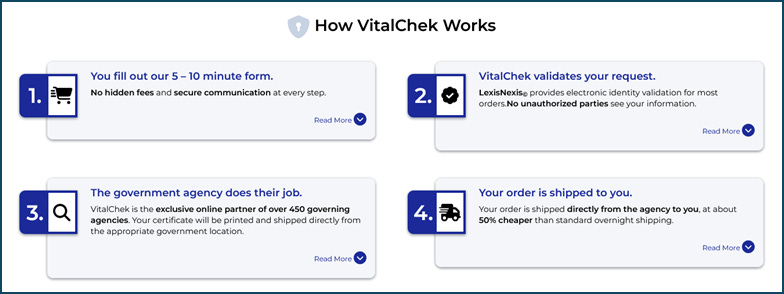
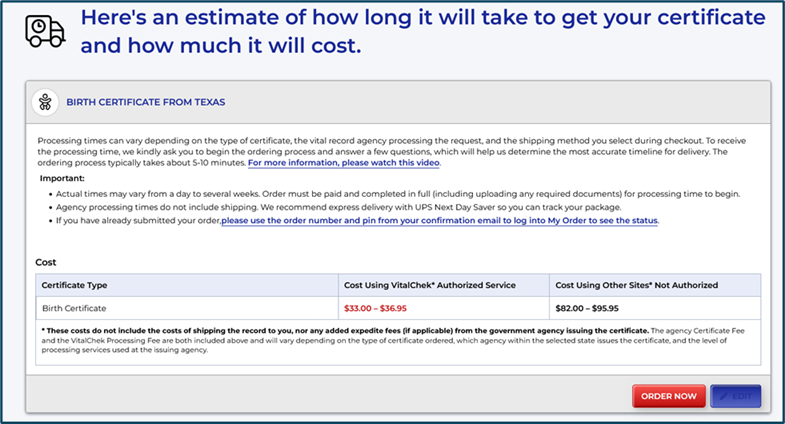
Beyond the logistics of fulfilling requests for certified copies of these records, the cost to voters should give everyone pause.[3] My home state of Nebraska provides a certified copy of a birth certificate free if the applicant attests that it will be used to meet voter identification requirements. But for others, the cost of compliance will be hefty (especially for women who changed their surname as a result of a marriage and thus might also need to provide a copy of their marriage license as well).
C. A Solution in Search of a Problem
Bush – Joseph, “Explainer: Noncitizen Voting in U.S. Elections,” Migration Policy Institute (September 2024).[1]
Center for Election Innovation and Research (CEIR), ‘Update: Review of Claims of Noncitizen Registrants and Voters,” (February 2026).[2]
…. CEIR continues to find that sweeping allegations about noncitizen registrations or voting appear to arise from misunderstandings, mischaracterizations, or outright fabrications about complex voter data. In every examined case, when claims about large numbers of noncitizens on voting rolls are subject to scrutiny and properly investigated, the number of alleged instances falls drastically. When investigations do turn up rare instances of improper registration or voting, officials take swift action to ensure that American elections remain secure.
In July 2025, CEIR published findings from our ongoing, systematic efforts to review and analyze claims about noncitizen registrants and voters in all fifty states. This brief provides an update on this analysis, examining relevant claims made through December 31, 2025. CEIR has continued to rigorously search and analyze government publications, news media, and other public sources in all fifty states to compile an expansive list of allegations of noncitizen registration and voting, as well as the results of official investigations into such allegations. As part of this update, CEIR has paid special attention to any reports from states using data from the Systematic Alien Verification for Entitlements (SAVE) program to identify potential noncitizens on voter lists.
CEIR’s key findings remain unchanged from the July 2025 review.
There Are No “Apples to Apples” Comparisons Between States. The allegations about noncitizen registration and voting in each state vary significantly, in ways that defy easy or meaningful comparison. Different state and nongovernment actors use different methodologies to identify potential noncitizens on the rolls, and the standard of evidence applied to claims can differ wildly from one allegation to the next. For example, some states have announced the number of records flagged by cursory reviews for possible noncitizen registrants, while other states wait to only publish the number of records removed after a thorough investigation. Regardless of the state, the numbers announced after thorough investigation are invariably far smaller than those announced before review. These inconsistencies contribute to the broad confusion in public discussion. Due to the inconsistencies, this review is focused on broad trends and illustrative examples.
Scrutiny Shrinks Claims. Claims of large numbers of possible noncitizens on voter records are revised significantly downward after proper investigation and scrutiny. Most often, investigations into large claims reveal that at least some early flags were based on outdated, incomplete, or improperly matched data that incorrectly labeled eligible citizens as possible noncitizens. The widespread use of SAVE by states has not changed this pattern. Unfortunately, when public announcements are made about the inflated initial numbers, the small numbers that follow from proper investigation generally receive far less public attention.
Even the Largest Claims Represent Tiny Fractions of Registered Voters in Any State. Even when taken at face value, the largest claims never identify numbers of possible noncitizen registrants or voters that amount to more than a few tenths of one percent of the number of eligible voters in a state. The limited scope of even the most sweeping claims indicates that existing safeguards and procedures are broadly effective. Election officials in every state have rigorously followed (and continue to rigorously follow) citizenship requirements for registration, and officials in every state painstakingly investigate every claim of an alleged ineligible registrant or voter. The small number of noncitizens actually found underscores the robust checks already in place.
Insights Into Claims of Noncitizen Registrants and Voters. CEIR has sought to be as expansive as possible in this analysis. Public claims of noncitizen registrants and voters have been documented spanning back over a decade, including instances where possible noncitizens may have registered to vote, instances where bureaucratic errors evidently registered noncitizens who did not seek to register themselves, instances where possible noncitizens may have cast a ballot in an election, and instances of voter records with unconfirmed citizenship status. Allegations were also documented regardless of the methodology used to produce them. Therefore, the list includes both careful, measured statements and speculative, opaque assertions. While this compilation should not be treated as a comprehensive catalog, it is a significant attempt at providing a shared basis for understanding and analysis.
…. To illustrate the broad strokes of these trends, two illustrative examples from the public record are provided below. Both examples are typical of national trends: routine investigation by state officials identified a very large proportion of flagged records were citizens and only a small number were noncitizens who registered to vote or had cast a ballot. These individuals were referred to proper authorities for further investigation. However, public discourse focused the large initial number of flagged records (later found to include many citizens), rather than the small numbers of noncitizens identified after thorough review.
Illustrative example: Iowa. The Iowa Secretary of State’s office announced in October 2024 that it had identified 2,176 voter registration records that potentially belonged to noncitizens. This initial, inflated allegation is only roughly one-tenth of one percent of active registered voters in Iowa at that time.
In March 2025, the secretary of state’s office revised down its initial claim of 2,176 potential noncitizens to 277 confirmed noncitizens (just one in eight records from the original allegation). This revision came after subsequent investigation of the flagged records using citizenship data from the Iowa Department of Transportation and additional checks with the USCIS SAVE tool. The revised claim equates to roughly one-hundredth of one percent of registered voters and includes 35 alleged noncitizens who cast ballots that were counted in 2024 general election. All of these individuals were referred to the state attorney general and the Iowa Department of Public Safety for further investigation.
Illustrative example: Michigan. In April 2025, the Michigan Department of State released the results of a systemwide audit of the state’s voter rolls. The audit, which began in December 2024, compared citizenship data in 7.9 million active driving records for Michiganders of voting age to 7.2 million active registered voters on the state’s rolls. It identified 16 instances of individuals who appeared to be noncitizens and who had cast a ballot in the 2024 general election, including a widely reported instance of a Chinese national who had voted in the election. Following standard procedure, these individuals were referred to the state attorney general for potential criminal charges. Taken together, these 16 instances represent roughly 0.00028% of votes cast by Michiganders in the 2024 general election.
In short, while proper investigations do reveal instances of noncitizens who have registered to vote or cast a ballot, such instances are rare, detected by election officials, and prosecuted by the proper authorities.
State Participation in the SAVE program. The Systematic Alien Verification for Entitlements (SAVE) program is an online service administered by U.S. Citizenship and Immigration Services (USCIS) within the Department of Homeland Security. SAVE is intended as a tool to allow registered federal, state, and local governments to verify citizenship and immigration status.
Historically, government agencies have used SAVE to confirm applicants’ eligibility for entitlement benefits, licenses, and other authorized purposes. In 2025, USCIS announced changes to SAVE to permit registered agencies to use SAVE for voter eligibility verification and waived previous fees. As of December 2025, USCIS reports an agreement with election offices in at least 22 states to use SAVE in this way. Additionally, CEIR’s review has identified at least two additional states where reports indicate that SAVE has been used to compare voter data through agreements with the state’s department of motor vehicles. However, election officials have expressed ongoing concerns about the reliability and security of using SAVE with voter registration data.
As part of this update, CEIR has paid special attention to reports and claims from states using SAVE to identify potential noncitizens on voter lists. CEIR’s review finds that only some states with a SAVE agreement have publicized the results of their searches, and that these publicized results typically follow the same patterns as other claims about noncitizen registration or voting. Subsequent investigations of claims based on SAVE information have revealed systemic gaps, errors, and other limitations. Initial claims about non-citizen registrations based on SAVE are frequently walked back after further review.
To illustrate these trends, another example is provided from the public record:
Illustrative example: Texas. In October 2025, the Texas Secretary of State’s office announced that it had used SAVE to identify 2,724 voter registration records that potentially belonged to noncitizens. This initial, inflated allegation is only roughly one-hundredth of one percent of active registered voters in Texas.
The secretary of state’s office distributed the list of identified records to county election officials for further investigation. A series of reports from December 2025 indicate that a large percentage of flagged records belong either to confirmed citizens or individuals who were registered in error by government officials. These include hundreds of individuals who showed proof of citizenship when registering at Texas’s Department of Public Safety (DPS), individuals who responded to county notices to provide proof of citizenship, and individuals who marked themselves as noncitizens on official forms but were incorrectly registered anyway by government agencies.
As one example, in October 2025, officials in Denton County, Texas received a list from the secretary of state’s office of 84 records registered in the county flagged for further review by SAVE. County officials identified that 37 of these flagged voters had registered to vote at DPS, which requires prospective voters to show proof of citizenship in order to register. However, because DPS could not share this data directly with counties under state law, county officials attempted to independently confirm citizenship for all 84 flagged records provided by the state.
By December, Denton County officials had found that 14 of the flagged records belonged to citizens who responded to a mail notice to confirm their status. Officials also found that another 14 flagged records belonged to self-identified noncitizens who had been mistakenly registered by government agencies in error, even though they had disclosed that they were noncitizens and ineligible to vote. The remaining 56 flagged records were canceled after county officials did not receive a response to their mail notice. However, local reports identified at least one citizen among these canceled records, who stated they had been unable to travel to county offices within the allotted time and did not want to risk sending sensitive proof of citizenship documents through the mail.
While SAVE may have some value as an additional tool to identify records with unconfirmed citizenship, the system’s limitations mean it should not be relied upon as the sole source for list maintenance. In fact, USCIS guidance advises that there are gaps in the data available to SAVE and instructs agencies to conduct additional review of any records flagged by the tool.
To avoid inadvertently disenfranchising citizens, states should check SAVE data against all available other data sources with citizenship information before asking individuals to prove citizenship or removing registration records. In addition, unaddressed concerns about the apparent lack of protections for voter data input into SAVE have given many states pause about the tool’s security.
Ezeh, Nicole, “Supreme Court Allows Partial Enforcement of Voter Proof-of-Citizenship Law,” National Conference of State Legislatures (September 4, 2024).[3]
Garber, Andrew and Wu, Connie, “States Already Enacting Harmful SAVE Act Policies, Requiring Proof of Citizenship to Vote,” Brennan Center for Justice Expert Brief (June 3, 2026).[4]
As the Senate considers the SAVE Act, state legislatures are advancing similar “show-your-papers” policies. Florida, South Dakota, and Utah have enacted similar laws in recent weeks. Other states that already have similar laws have experienced the difficulties of implementing them.
Including Arizona, which has had a proof-of-citizenship requirement for over 20 years, 5 states will have a show-your-papers requirement for all people registering or updating their registration for the 2026 midterms: Arizona, New Hampshire, South Dakota, Utah, and Wyoming. A sixth state, Louisiana, has one on the books that it has not yet implemented.
State legislatures have recently passed three types of legislation, all premised on false claims about noncitizens on voting rolls:
Laws that require every applicant to present a passport, birth certificate, or other citizenship documentation when they register to vote
Laws that require some voters to present a passport, birth certificate, or other citizenship documentation, in some cases as a backstop after election officials verify applicants’ citizenship by cross-checking other data sources, a process that inevitably misidentifies some people as noncitizens because of flawed data
Laws that call for aggressive purges using methods that will remove some eligible American citizens from the rolls
Recently Enacted State Show-Your-Papers Laws. New Hampshire instituted a requirement in 2024 for all in-person registrants to show a passport, birth certificate, or other document indicating citizenship when registering to vote. Last year, the state expanded the requirement to registering by mail.
New Hampshire’s laws have already led to widespread confusion and eligible Americans not being able to vote. In town elections in 2025, voters and poll workers contended with various issues, including married women who could not register because they didn’t have their marriage license reflecting their name change on hand. At least one woman had to come back three times, while others couldn’t register at all. The state had to pass a cleanup law last year to help poll workers deal with confusion. That law requires polling places to have real-time access to state databases, a useful system but one that takes time and expense to roll out.
Wyoming enacted a proof-of-citizenship law in 2025. In addition to a passport, birth certificate, naturalization paper, or military card, it allows people to use driver’s licenses so long as that license doesn’t indicate the holder is a noncitizen. The state began putting such marks on new driver’s licenses in 2025. Unlike the SAVE Act, any U.S. citizen with a driver’s license can satisfy Wyoming’s new law.
New Hampshire and Wyoming are two of just six states that are exempted from a federal law that prohibits a proof-of-citizenship requirement to register to vote in federal elections. The National Voter Registration Act requires the availability of a voter registration form for federal elections on which applicants swear under oath that they are citizens but aren’t forced to provide a document to prove it. As a result, 44 states could have a show-your-papers law only for state elections. The law doesn’t apply to Idaho, Minnesota, New Hampshire, Wisconsin, and Wyoming because they have had election-day registration since the law’s passage in 1993, or North Dakota because it doesn’t have voter registration.
In practice, “bifurcating” voter rolls means states would need to keep one set of voter rolls for use in federal elections and another set of voter rolls for use in state elections. They would also have to print distinct ballots for voters on each set of rolls in any election that involves both federal and state races. Creating and running these systems are costly and complex to manage, which is why Arizona is the only state that undertook it before 2025.
The need to bifurcate looms over most states considering these laws. This year, South Dakota and Utah enacted laws that only apply to state elections. They require a passport, birth certificate, tribal ID, or driver’s license with a U.S. citizenship notation on it (which few people currently have) to vote. Concerningly, they don’t appropriate funds to develop new voter roll systems and purportedly take effect for the 2026 midterms. Utah’s effort to pass its law was surprising, as the lieutenant governor recently announced that the state found only one noncitizen on the rolls out of around 1.8 million active voters.
Louisiana passed a show-your-papers law in 2024 that left all the details to the secretary of state. Although this law has technically been in effect for almost two years, the secretary of state’s office has not taken steps to implement it. The registration form on the secretary’s website doesn’t even reference the need for citizenship documentation.
A few other states have previously tried to impose similar laws without success. Kansas had a similar law struck down by a court in 2018; it prevented more than 30,000 American citizens from registering to vote before that order. Alabama and Georgia have policies on their books that aren’t in effect because of court orders as well.
Recently Enacted Related Laws. Indiana, Ohio, and Mississippi enacted show-your-papers laws that apply to some voters or registrants in 2025. Indiana’s requires people who register using a temporary ID, such as asylum seekers or people on residence or work visas, to present a passport, birth certificate, or naturalization papers. Ohio — which snuck its provision into a late version of a transportation law — added a proof-of-citizenship requirement for anyone registering or updating their registration at the DMV. The law doesn’t say what documents would suffice, although guidance from the secretary of state suggests driver’s licenses that don’t have noncitizen marks, birth certificates, passports, and naturalization papers satisfy the new law.
Mississippi already required voter registration applications to be checked against Department of Public Safety data. Anyone identified in the Department of Public Safety’s system as a noncitizen had their information run against federal citizenship data (through the Department of Homeland Security’s confusingly named SAVE program). If the SAVE program deemed that person a noncitizen, local registrars had to send them a notice that they need to provide proof of citizenship to be registered. A new law this year also requires people without driver’s licenses to have their information compared to federal citizenship data accessible through the SAVE program. Because that program doesn’t have complete citizenship data, some eligible citizens who don’t drive will need to provide a citizenship document.
In 2023, North Dakota enacted a similar law. North Dakota has no voter registration; instead, voters show ID at the polls. Under the new law, voters cannot use an ID with a noncitizen mark on it, which the state includes on driver’s licenses and other IDs. Any eligible voter who has an ID with a noncitizen mark (e.g., recently naturalized citizens) must acquire an updated ID reflecting their U.S. citizenship and bring it to an elections office within 13 days of the election for their vote to count.
In 2025, Tennessee enacted a law that, rather than impose a proof-of-citizenship requirement on all voters, obliges the state coordinator of elections to create a citizenship verification system by January 2028 for use by county officials. The law leaves the details to the officials. It’s not clear from the new law or existing statutes what proof eligible U.S. citizens will need to appeal if their application is improperly rejected.
On April 1, Florida’s governor signed a citizenship verification measure similar to Tennessee’s that would require all registration applications to be compared with department of motor vehicles’ citizenship records. Anyone who can’t be verified as a citizen, which will include some naturalized citizens and citizens without driver’s licenses, will be registered as an “unverified voter” and can only have their vote count if they show a passport, birth certificate, naturalization paper, or another government-issued photo ID that indicates U.S. citizenship. The law, whose proof-of-citizenship provisions go into effect in 2027, doesn’t contain a carveout for federal elections.
Recently Enacted Purge Laws. Several states have enacted laws that seek to aggressively remove alleged noncitizens from the rolls. Voter list maintenance is important. But when it is done too broadly, eligible American citizens who followed all the rules can be disenfranchised.
Arizona, Indiana, and Kansas have enacted laws in the last few years to require election officials to compare voter files with DMV citizenship records and remove voters identified as possible noncitizens. The states did not institute adequate safeguards to keep American citizens on the rolls. Although all except the Kansas law require officials to send cancelled voters a notice, such comparisons can leave a gap: Some people become citizens after getting their driver’s licenses. They may not return to the DMV and update their citizenship status until their licenses expire years later.
Arizona, Idaho, Mississippi, Utah, and Wyoming have passed laws since 2022 that oblige state officials to compare voter rolls with SAVE program data and remove voters flagged as noncitizens. However, the SAVE program doesn’t include information on all U.S. citizens and recent changes increase the risk of misidentifying individuals.
A 2025 Iowa law creates an “unconfirmed” registration status when officials receive information from a “reliable” source that a voter is a noncitizen. People can confirm their status by providing “evidence” of citizenship. And in 2022, South Carolina began to allow voter purges based on information from state or national public safety databases indicating someone isn’t a citizen. Officials don’t have to notify affected voters. These laws, which codify the use of incomplete or flawed data, risk purging eligible American voters.
Gehrke, Robert and Anderson Stern, Emily, “Utah Voter Roll Review Finds No Evidence Of Noncitizens Casting a Ballot, Lt. Gov. Says,” Salt Lake Tribune (January 23, 2026).[5]
…. After spending months reviewing 2.1 million people on Utah’s voter rolls, the lieutenant governor has not found a single instance of a noncitizen voting in the state and only one instance of an ineligible individual registering to vote.
Kaminski, Anna, “As More States Pass Proof Of Citizenship Laws, Report Points to Kansas As Cautionary Tale,” Kansas Reflector (December 24, 2025).[6]
Kansas’ failed proof of citizenship law could serve as a cautionary tale for Congress and other states just beginning to craft similar voting restrictions, a report found.
Federal legislation reintroduced earlier this year would require voters to provide documented proof of citizenship to vote in federal elections. Kansas has been there, done that. A report from three organizations, analyzing data from Kansas and Arizona, posits that such citizenship laws are costly, error-prone and disenfranchise voters.[7] Plus, citizenship is already a requirement to vote nationwide.
Noncitizen voting is vanishingly rare, said Lata Nott, director of voting rights policy at the Campaign Legal Center and one of the report’s authors. “We wrote this report to look into the actual financial costs of these laws, but, of course, there’s also the cost of — it’s a nonmonetary cost — people get disenfranchised by these laws, or you make it really hard for them to vote,” Nott said.
…. The report used Kansas and Arizona as touchstones to illustrate the unforeseen financial costs of executing documentary proof of citizenship laws as they gain traction in Congress and statehouses nationwide.
…. Kansas’ stint with a documentary proof of citizenship law was brief. After the passage of the Kansas Secure and Fair Elections, or SAFE, Act in 2011, every Kansan registering to vote was required to provide documentary proof of citizenship, which could include a passport or a birth certificate. The law was implemented in 2013, and it was in effect for more than 3 years before a judge blocked its enforcement.
The report’s authors reviewed fiscal notes attached to documentary proof of citizenship legislation. Lawmakers often didn’t provide any fiscal analysis, ignore fiscal effects on local governments or provide incomplete fiscal analyses.
The report said Kansas’ fiscal note was an example of “gross underestimation” of state costs and burdens on local election officials. Lawmakers estimated a $12,500 increase in expenditures in the Secretary of State’s Office in fiscal year 2011 and a $1,000 increase in the following fiscal year.
In its first full fiscal year, the Kansas Secretary of State’s Office spent more than $192,000 to implement the act. The report hypothesizes the office spent more than $350,000 in total between the law’s passage and effective dates.
At the time, county election officials did not have access to systems that could crosscheck passport numbers or birth certificate records.
Neda Khoshkhoo, interim director of democracy at Dēmos and an author of the report, said proof of citizenship laws erect social barriers, and those barriers are tied to a chronic underfunding of this type of legislation. “They, ultimately, are a form of voter suppression, which has a particular impact on voters of color and low-income voters and other historically marginalized groups,” Khoshkhoo said. The disenfranchisement compounds, she said, when downstream effects of underfunding lead to incorrect implementation of a citizenship verification system, and voters are increasingly denied access to ballots.
….Implementing proof of citizenship laws typically require investments in technology upgrades, staff training and data privacy, Nott said. Kansas tied its citizenship verification process to its driver’s license database.
“When you do that, you will probably run into some errors,” Nott said. “Kansas has. Arizona has. And those errors, they’re not just minor errors. They’re errors that disenfranchise people, that take away their right to vote.”
However the report identified a larger problem. Division of motor vehicles clerks in Kansas weren’t allowed, by policy, to request proof of citizenship from voters when renewing or updating their licenses. Clerks statewide also were not allowed to inform people of the new requirement.
The report said Kansas “faced a multitude of technological, organizational and legal challenges that were a direct result of the flawed system designed by the SAFE Act and its implementing regulations and directives.” More than 30,000 Kansans were prevented from voting and saw their registrations suspended or deemed invalid because of the state’s law.
…. In 2018, a federal judge struck it down, ruling the law unconstitutional and in violation of the National Voter Registration Act. The 10th Circuit Court of Appeals upheld the judgment in 2020, concluding the law had an outsized effect on voters. It ruled that the inclusion of noncitizens on Kansas’ voter rolls could be attributed to administrative issues. A confirmed 39 noncitizens successfully registered to vote in Kansas between 1999 and 2013, making up 0.002% of voters, according to the appeals court’s opinion.
Morales – Doyle, “Analysis: Noncitizen Voting Isn’t Affecting State or Federal Elections — Here’s Why,” Brennan Center for Justice (April 12, 2024).[8]
…. It’s a federal crime for noncitizens to vote in federal elections. It’s also a crime under every state’s laws. In fact, under federal law, you could face up to five years in prison simply for registering to vote. It’s also a deportable offense for noncitizens to register or vote. And sure, people make bad decisions and commit crimes all the time. But this one is different: by committing the crime, you create a government record of your having committed it. In fact, it’s the creation of the government record — the registration form or the ballot cast — that is the crime. So, you’ve not only exposed yourself to prison time and deportation, you’ve put yourself on the government’s radar, and you’ve handed the government the evidence it needs to put you in prison or deport you. All so you could cast one vote. Who would do such a thing?
Maybe you’re thinking that there are a bunch of noncitizens voting and getting away with it. Again, consider the fact that in order to commit these crimes you create a government record of having committed them. Indeed, anyone can look up your voter history on public voter files. And election officials conduct regular maintenance of these voter lists — in fact, they’re required to by federal law. Moreover, these are crimes that U.S. Citizenship and Immigration Services officers are instructed to look into during the naturalization process. So, if you ever try to become a citizen, you’ll be caught.
Swenson, Ali and Hussein, Fatima, “Judge Blocks Use Of Federal Database To Check Citizenship, Saying It Could Wrongly Purge Voters,” AP News (June 22, 2026).[9]
A federal judge on Monday ruled that a recently revamped version of a federal tool central to the Trump administration’s efforts to nationalize elections can no longer be used.
U.S. District Court Judge Sparkle L. Sooknanan sided with advocacy groups that argued the recent upgrades to the program, called Systematic Alien Verification for Entitlements, or SAVE, aggregated Americans’ sensitive personal data in a way that could result in voters being wrongly purged from voter rolls.
“All in all, the federal government has knowingly trampled on the privacy rights of American citizens in a manner that threatens the sacred right to vote,” Sooknanan said in an order explaining the decision. “This Court cannot stand idly by while that happens.”
She said Congress had expressly prohibited the government from centralizing Americans’ personal identifying information and that the federal agencies that created the SAVE program “knew that the database violates those statutory protections.”
The decision is a major legal setback for President Donald Trump in his efforts to use federal agencies to encourage a nationwide crackdown on having noncitizens illegally on state voter rolls. The modified SAVE system, which critics had referred to as an unlawful centralized federal database of voter information, had been a key pillar of the second election executive order the Republican president signed earlier this year. The ruling leaves its future uncertain.
…. The SAVE program was created under an immigration law mandating that DHS help federal, state and local agencies prevent government benefits from going to noncitizens. At least 25 states used it to check their voter rolls since April 2025, after the Trump administration significantly expanded its search abilities. Since then, at least 67 million registrations have been scanned through the program, but critics worry it could end up purging valid voters from the rolls.
…. Anthony Nel was one of those whose registrations were wrongly flagged. The South Africa native became a U.S. citizen more than a decade ago but had his voter registration in Denton, Texas, north of Dallas, canceled temporarily last year after Texas ran its voter file through SAVE. The check wrongly identified him as a potential noncitizen. “I hope others can see this fight and not take their right to vote for granted,” he said in a text message.
…. Plaintiffs’ attorney Nikhel Sus told the court during the October hearing that naturalized citizens face a greater risk of unlawfully being purged from voter rolls. “They are uniquely vulnerable to errors in the database,” said Sus, an attorney for Citizens for Responsibility and Ethics in Washington.
D. Vote.org, “The SAVE Act: What Every American Voter Needs to Know,” (Undated).[10]
What is the SAVE Act? The Safeguard American Voter Eligibility Act (also called the SAVE Act or SAVE America Act) is a federal bill that would fundamentally change how Americans register to vote. It has passed the House of Representatives multiple times since 2024, including most recently in February 2026, and is being debated in the Senate this week.[11]
Today, Vote.org can help you register to vote in minutes, online, from anywhere. Under the SAVE Act, that process would change significantly. Voters would generally need to present documentary proof of citizenship in person before completing registration, effectively eliminating most current online and mail registration methods. For most people, that means a passport or certified birth certificate.
What is the Bill Trying to Accomplish? Its stated goal is to make sure only U. S. citizens vote in federal elections. That is already the law, and it is already being enforced. Noncitizen voting has been a federal crime since 1996, carrying serious penalties including fines, imprisonment, and deportation. What the SAVE Act would do is add a new layer of documentation requirements on top of a verification system that is already in place and working.
…. Is Noncitizen Voting Actually a Problem? The data says not at the scale this bill implies. Utah recently completed one of the most comprehensive citizenship reviews ever conducted at the state level, examining more than 2 million registered voters. They found one confirmed instance of noncitizen registration and zero instances of noncitizen voting. Federal data from U. S. Citizenship and Immigration Services shows that just 0.04% of voter verification cases flag as potential noncitizens, and even within that small group, many had already provided proof of citizenship when they registered.
How Does Citizenship Verification Work Today? When you register to vote, you swear under penalty of perjury that you are a U. S. citizen. Election officials rely primarily on state-level systems and processes to verify voter eligibility, with some limited use of federal databases in certain circumstances. The system is active, ongoing, and already producing results. This context matters, because it tells us exactly what the SAVE Act would be adding, and at what cost.
How Do Most Americans Register Today? Online, by mail, or at the DMV. In 2022, over 18 million Americans registered or updated their registration through those channels. Only 6% of voters currently register in person at an election office.
How Would That Change Under the SAVE Act? Every American, including people who have been registered for decades, would need to appear in person at an election office with qualifying documents. Online voter registration, which 42 states currently rely on, would be upended or eliminated. Mail registration would end entirely. Voter registration drives would become functionally ineffective, since they depend on reaching people at events and public spaces where no one carries a passport or birth certificate.
What Documents Would Actually Qualify? This surprises most people. A standard driver’s license alone does not qualify in most states. A REAL ID alone does not qualify. A military ID alone does not qualify. A tribal ID alone does not qualify. Only five states currently issue enhanced driver’s licenses that meet the bill’s requirements on their own.
For most Americans, qualifying requires one of the following: a valid U. S. passport or passport card, a certified birth certificate paired with a photo ID, a naturalization certificate, or a Consular Report of Birth Abroad. If your name does not match across those documents, additional paperwork such as a marriage certificate would also be required.
Does This Only Apply to New Voters? No, and this is important. The requirement applies any time a voter updates their registration, including after moving, changing their name, or switching political parties. Millions of already-registered Americans would need to comply, not just people registering for the first time.
Is This a Modern Poll Tax? What is a Poll Tax? The 24th Amendment to the U. S. Constitution, ratified in 1964, prohibits any fee as a condition of voting in federal elections. Poll taxes were historically used to prevent low-income Americans from participating in democracy and are unconstitutional.
Does the SAVE Act Charge a Fee to Vote? Not directly. But the documents it requires are not free. A U. S. passport costs a minimum of $165 in application fees and photos. A passport card, a cheaper alternative accepted under the bill, costs $65. A certified birth certificate costs $10 to $50 depending on the state. Replacing a lost naturalization certificate costs $1,385.
Over 51% of Americans do not have a valid passport. Only 1 in 5 Americans with household incomes below $50,000 has one. Only 1 in 4 Americans without a college degree has one. Constitutional scholars across the political spectrum have raised serious questions about whether requiring voters to purchase documents in order to register violates the 24th Amendment. That question has not yet been resolved by the courts.
This Affects More Americans Than You Think, and Not Who You Might Expect. The impact of the SAVE Act does not fall neatly along political or demographic lines. Here is who bears the real burden.
Married Women. An estimated 69 million American women do not have a birth certificate that matches their current legal name. Under this bill, they would need to present both a birth certificate and a marriage certificate to establish their identity. Research shows that conservative and Republican-leaning women are statistically more likely to have changed their surnames after marriage. This burden is not partisan. It falls on tens of millions of women regardless of how they vote.
Rural Americans. In the 30 largest counties by area in the Western United States, voters would need to drive an average of 260 miles to reach an election office. One analysis found rural voters facing a 4.5-hour round trip on average. A Center for American Progress analysis found that some voters in Alaska and Hawaii would need to fly.[12] For anyone working hourly, without reliable transportation, or with a disability, that is not a manageable requirement.
Young and First-Time Voters. About 24% of Americans under 30 do not have ready access to qualifying documents. Voter registration drives at college campuses and community events would largely end since they depend on mail-in forms. Young voters who move frequently would need to re-present their documents every time they update their registration.
Low-Income Americans. The financial barriers above fall hardest on working-class Americans across all political backgrounds. They are simply the least likely to have a passport or the flexibility to visit an election office during business hours.
People of Color. Research from the Brennan Center for Justice found that over 21 million Americans lack ready access to documentary proof of citizenship, with people of color disproportionately represented in that group.[13] Nearly half of Black Americans under 30 do not have ID with their current name and address. Many older Black Americans, born during the pre-civil rights era, were never issued a birth certificate at all.
Military Members and Americans Abroad. The U. S. Vote Foundation has documented that the bill’s in-person requirement would create significant barriers for service members stationed overseas and American citizens living abroad.[14]
Transgender Americans. Before this bill, an estimated 210,800 transgender Americans in states with existing voter ID laws already lacked IDs correctly reflecting their name or gender. The SAVE Act adds another documentation layer on top of barriers that already exist.
We Already Know What Happens When States Try This. Kansas implemented a state-level proof-of-citizenship requirement for voter registration. Before the law, noncitizen voter registration in Kansas was approximately 0. 002% of all registered voters. After the law took effect, it blocked roughly 31,000 eligible U.S. citizens, representing 12% of all applicants, from registering. It prevented far more American citizens from registering than noncitizens and was eventually struck down in federal court. Arizona implemented a similar requirement with a comparable outcome.
These are not projections. They are documented results from states that have already run this experiment, and they raise serious questions about what a national version would produce.
There is Also a Significant Cost to the People Who Run Our Elections. Under the SAVE Act, an election official who registers a voter without the correct documents can face criminal penalties and civil lawsuits, even if that voter is a legitimate U. S. citizen. Under the bill, election workers could face up to five years in prison for registering someone without the correct paperwork, even in good faith. Election officials are largely nonpartisan local government employees, and voting administration groups nationwide have raised serious concerns about the liability this creates. The Bipartisan Policy Center, which supports the goal of ensuring only citizens vote, has noted that verifying the authenticity of birth certificates and passports is a task most election offices are not currently equipped to perform.[15]
[As usual, see the attached PDF for the full article, including all footnotes and graphics.]

This is incredibly detailed, well organized, and thorough. Thank you for taking the time to research and write this!