

In response to the Democracy 2029 mentioned elsewhere here on Information Bank, here’s my proposal for a policy platform to underpin the Democratic Party’s effort in this November’s elections and beyond.
ELECTIONS: Project for America’s Future
As we look towards the pivotal 2026 General Election, we want Americans to share in our vision of the future. We want you to know that our officials at the federal, state, and local levels will be working together to advance a Partnership for America’s Future. Per usual, a PDF version of the full document is appended at the end to facilitate easy saving and sharing.
I. Goals
Government isn’t Them. Or some scary Deep State set out to destroy our way of life. It is US. It is US working together to make life better for us individually and collectively. Core building blocks of that effort are:
An Educational System Second to None
Jobs to Build a Life On
Justice and Respect for All
Communities to Feel Safe In
A Helping Hand in Times of Need
Preservation of Our Constitutional Freedoms & the Rule of Law
An Economic System That Fosters Entrepreneurship, Innovation & Jobs for All
Stewardship of Our Precious Natural Resources
Global Leadership to Promote Peace and Prosperity
We still believe in the power of the American Dream and know that you do too. We still believe in neighbor helping neighbor and know that you do too. Let’s work together to make certain the great American dream becomes a reality for each and every one of us.
II. The Building Blocks of the Partnership
Each region, state, county, city, and neighborhood in America is unique. Each has a different mix of natural features, resources, and governing challenges that require a specialized approach. But despite those difference, we believe there exist a set of public policy goals that are beneficial to all Americans. We pledge to advance the achievement of all those goals. We do so being mindful of our responsibilities to be:
Fierce advocates for open, transparent government;
Laser focused on being excellent stewards of taxpayer dollars;
Guardians of a safe, sound financial system;
Honest, ethical leaders;
Attentive to the unique challenges facing rural and tribal communities, especially regarding access to broadband, child care, health care, housing, job training, transportation services and public utilities (especially drinking water);
Passionate defenders of wildlife and our environment;
Willing partners in intergovernmental and mutual aid agreements; and
Zealous defenders of the rule of law and free, fair elections.
Although the priorities differ for regions, states, counties, cities, and neighborhoods, we believe the following policy objectives are among those that are universally important to advance:
Agriculture – Continuation of existing government support to individuals who would like to enter farming and/or seek to keep a farm in the family;
Children/Youth – Elimination of child marriage;
Civil Rights – Ratification of the Equal Rights Amendment to the Constitution;
Consumer Protection – Adoption of “right to repair” laws;
Consumer Protection – Bans on junk fees and surveillance pricing;
Consumer Protection – Enactment of strong protects against deed theft and title fraud;
Consumer Protection – Require that data brokers allow individuals to request deletion of the data collected about them;
Economy – Revise the current measurements for employment/unemployment, inflation, and poverty to reflect real world conditions (i.e., one should not be considered “employed” if he/she works only one hour in a week);[1]
Economy – Vigorous enforcement of anti-trust laws to protect entrepreneurs, farmers/ranchers, and small business owners and keep prices down through open competition;
Elections – Adoption of at least five days of in-person No Excuse Early Voting for all federal and state elections;
Elections – Authorization for the counting of ballots postmarked before/on Election Day and received within five (5) business days of Election Day (i.e., by close of business the following Tuesday);
Elections – Banning of corporate campaign contributions;
Elections – Designation of Election Day (in even numbered years) as a Federal holiday;
Elections – Elimination of anonymous donations to political action committees (PACs);
Elections – Enactment of a requirement that all of a state’s Electoral College votes go to the winner of the national popular vote;
Elections – Mandatory notification of voters regarding technical errors in their By Mail or Voter Registration applications or submissions with an opportunity to correct those errors (i.e., 5 business days after Election Day);
Elections – Passage of a State Voting Rights Act;
Elections – Automatic restoration of voting rights automatically once a formerly incarcerated individual has completed all of his/her sentence (including probation);
Elections – Shifting of post-Census redistricting responsibilities to citizen panels;
Government – Capping the term of a Supreme Court Justice at 18 years;
Government – Elimination of the requirement that Congress votes to raise the debt ceiling;
Government – Expansion of the citizen initiative process to all states;
Government – Imposition of an ethics code on members of the US Supreme Court;
Government – Limitations on the President’s pardon powers;
Government – Prohibition on trading in individual stocks by the President, Vice President, Members of the President’s Cabinet and Congress, plus members of their immediate families (i.e., spouses and minor children);
Government – Ban betting in predictive markets on any governmental action;
Government – Extension of full representation in the US Congress to the District of Columbia;
Health Care – Vigorous steps to streamline licensing of health care professionals to serve all segments of the country and the population (with a special focus on emergency response capacity in rural areas and long-term care needs across the nation);
Housing – Funding of building code enforcement at the local level to ensure that landlords meet their obligations to tenants for quality, safe housing;
Housing – Focus on home weatherization projects for low-income individuals to reduce both energy utilization and utility costs and help build wealth for the homeowner by increasing their property’s value;
Housing – Revamping of existing landlord – tenant law to address a growing trend toward corporate ownership of rental housing and the resulting imbalance in the landlord – tenant relationship;
Infrastructure – Continuation of major investments in the building/maintenance of airports, broadband systems, bridges, emergency communications systems, ports, rail systems, roads/streets, transit systems, water/wastewater facilities, and other infrastructure, as they underpin all economic activity and public health;
Infrastructure – Development of comprehensive inventories of physical assets for all levels of government (especially broadband service, levees, parks, school facilities, and stormwater systems) to facilitate sound infrastructure construction and maintenance decisions;
Labor Laws – Adoption of the recommendations presented by the National Employment Law Project and its partners covering arbitration, non-compete clauses, overtime pay, and rights to organize;
Labor Laws – Enhancement of penalties for violations of child labor laws, rollback of recent laws that loosened child protections, and appropriation of sufficient funding to allow comprehensive enforcement of all employment/labor related laws;
Labor Laws – Increase the federal minimum wage to $15 per hour from its current level of $7.25 (a figure set in 2009), indexing of that rate, and eliminate the carve out for workers with disabilities;
Labor Laws – Phase-in a requirement for paid sick leave and vacation time for all employees with flexibility, as necessary, for small businesses;
Labor Laws – Reform of the nation’s unemployment compensation system to cover all workers for at least 26 weeks and at a higher percentage of previous wages (e.g., 60 percent) with tight timelines for the distribution of initial benefits and aggressive anti-fraud capabilities;
Labor Laws – Upgrading of penalties for wage theft and sufficient funding to allow swift pursuit of these cases;
Labor Laws – Vigorous enforcement of federal, state, and local laws to promote occupational health and safety (e.g., municipal ordinances that mandate rest and water breaks in periods of high temperatures that exceed state standards);
Labor Laws – Adoption of “Fair Workweek” and/or “Predictive Scheduling” laws;
Labor Laws – Appropriation of adequate funding at the federal, state, and local levels to ensure comprehensive, effective enforcement of all employment/labor laws and regulations;
Legal Aid – Level the playing field between the business community and consumers with well-funded consumer advocacy, legal aid, and tenant’s rights offices;
Libraries – Support for libraries in their expanded role as knowledge and resource centers (e.g., makerspaces and job training and language seminars);
Military – Elimination of hazardous, substandard conditions in military housing;
Nutrition – Provide free breakfast and lunch to all public-school students;
Public Safety – Enactment of “red flag laws” allowing temporary confiscation of firearms from a person deemed to be a threat to himself/herself and/or another party;
Public Safety – Establishment of national standards for law enforcement officers employed by public sector entities and a national registry for reporting misconduct by law enforcement offices;
Public Safety – Mandatory testing of all rape kits within a reasonable time frame and elimination of the backlog of untested rape kits by December 15, 2027;
Public Safety – Enhanced staffing of police departments with mental health professionals to take lead responsibility on calls involving individuals exhibiting signs of mental distress;
Public Safety – Appropriation of sufficient monies for federal/state/local public defenders so that justice for the victims or vindication for the accused will be swift;
Retirement – Facilitation of pension portability and continued expansion of state mandated retirement plans and STABLE accounts;[2]
Taxation – Elimination of sales taxes on food, diapers, and personal hygiene products;
Taxation – Establishment of tax expenditure budgets and tracking of tax waivers to ensure that the benefits of the tax breaks far exceed the costs (and do not unfairly discriminate against existing small businesses);
Taxation – Funding of tax administration agencies adequately so they have the resources to make certain everyone pays all legally owed taxes;
Technology – Extension of broadband services to all homes and businesses in America ASAP; and
Workforce Development – Provide a pathway to a secure future through access to quality job training and lifelong learning opportunities, with equal focus on college and technical education.
III. The National Performance Review II
The items listed above are designed to fix inefficiencies, injustices, and other troublesome aspects of current laws and government operations and programs. As America has passed its 250th birthday anniversary, it’s time to engage in a national conversation about federal government operations and intergovernmental relations. Just as the New Deal and the Great Society wrought dramatic changes to fit the needs of the time, it’s appropriate to ask which broader structural reforms (if any) should be implemented now.[3]
The next President, therefore, should launch a national conversation on how to structure the federal government to best serve the needs of the nation. Focus areas should include:
Economic, industrial, labor, research/development, science, and technology policy;
Education and workforce development;
Emergency preparedness and response (including emergency medical services);
Governance (e.g., elections, ethics, service delivery basics, and size of Supreme Court);
Health care (including the veterans’ health care system);
Intra- and Intergovernmental relations (federal, state, and local);
Law enforcement (including ability of states to hold federal officials liable for violations of state laws);
Natural resource and wildlife conservation;
Quality of life (e.g., cultural, historical and recreational);
Revenue/taxation policy (including the national debt);
Social safety net (foster care and financial, food, and housing assistance with special attention on minimum payments for each); and
Tribal & federal/state/local government relations.
Instead of a think tank process conducted in secret and funded by billionaires, this effort must be a government sponsored effort featuring town halls in each state where everyone’s voice may be heard – because that’s the American way!
IV. Bold Reforms
Assuming the adoption of the aforementioned basic recommendations, I’d suggest the following bolder reforms:
Anti-Corruption – Combatting corruption in the federal government, by all measures, appears to be a priority concern for voters in the coming elections. Although a few basic suggestions are listed above, I have a more comprehensive series on this topic under development.[4]
Dependent Care – Move to “care centers” that combine assisted living/nursing homes, adult day care, child care, and/or dependent care (e.g., those with disabilities) to enhance economies of scale and staff utilization. In select areas, incorporate “special needs” dental care services as well. Promote, to the greatest extent possible, the use of those facilities to train allied health professionals, for example, by partnerships with community colleges.
Medicare – Impose the “Medicare” tax on all income (i.e., eliminate the cap). Drop the age for eligibility to 58 and simplify coverage to a combined mental and physical health, dental, hearing, and vision care and prescription drug coverage (i.e., no separate deductibles or premiums for each type of coverage). Allow a buy-in by others who do not have employer provided health care.
Tax Proposals (Fair Share) – Pending an overall review on the nation’s tax structure, I would recommend an interim step, i.e., a corporate minimum tax with the proceeds to fund water infrastructure projects across the US (e.g., lead pipe removal).[5] Given that every business in America depends on federal/state/local infrastructure to facilitate income generating opportunities, it’s a rational approach that provides the business community DIRECT benefits and boosts the national economy.
Proceeds from that corporate minimum tax also should fund comprehensive legal aid and public defender services (federal, state, and local levels). The attractiveness of the United States as a place to do business depends, to a great degree, on the quality of the legal system here. Adequate funding for these services also would ensure swift resolution of complaints involving business interests, which also would accrue to their benefit.
In addition, I would recommend enactment of a wealth tax (federal and state) on individuals with proceeds to fund cultural institutions/organizations (e.g., art and music), historic preservation, humanities programming, libraries, museums, parks, recreation, and wildlife conservation (including wildlife crossings).
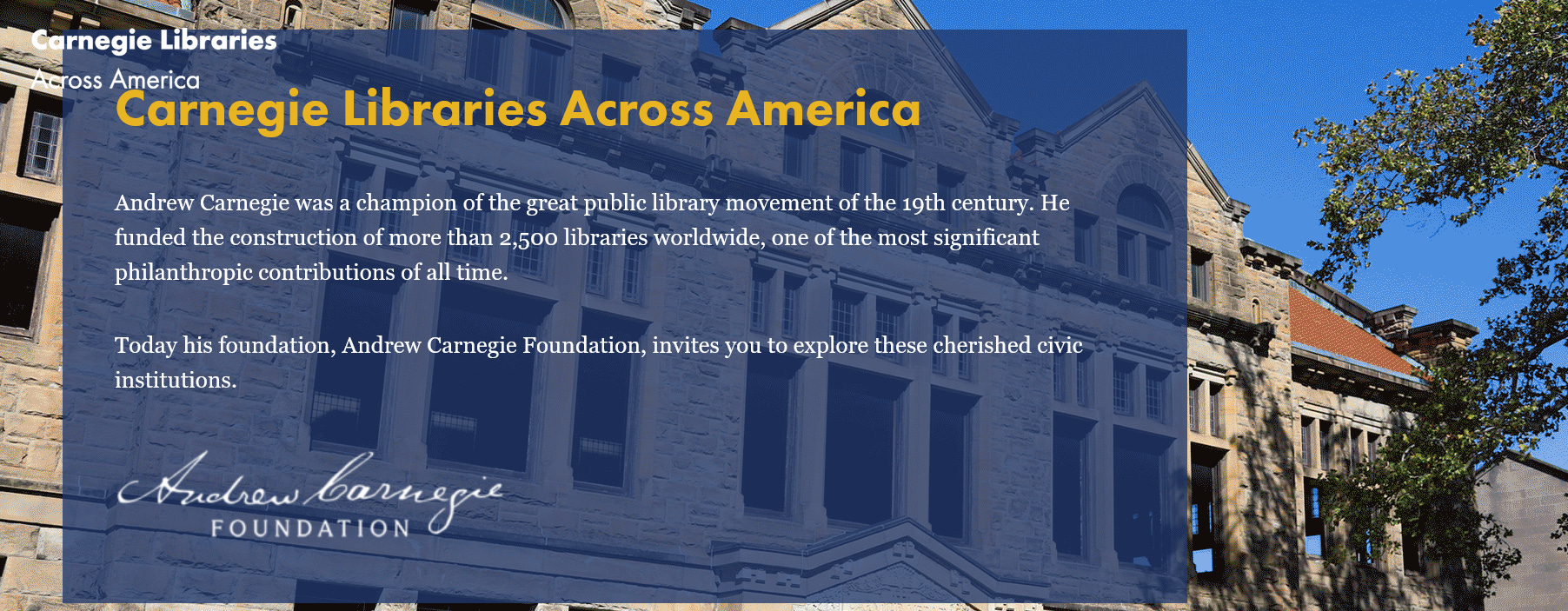
The benefits from these projects accrue to all residents of the United States and those doing business here. Moreover, the wealthy have a long tradition of funding such projects across the United States. (Andrew Carnegie transformed life in America by funding the building of 1,681 libraries.[6]) Those of the modern era with the financial means should welcome the opportunity to make a similar transformational contribution to the nation that enabled them to generate enormous wealth.
V. Your Thoughts?
What priorities do you have for federal, state, and local governments in 2027 and beyond?

[1] See “Issue Insights: Fixing the Broken Economy (The True Cost-of-Living),” https://sharonlawrence.substack.com/p/issue-insights-fixing-the-broken.
[2] National Association of State Treasurers, ”State-Facilitated Retirement Plans,” https://nast.org/state-facilitated-retirement-plans.
United States Social Security Administration, “Spotlight on Achieving a Better Life Experience (ABLE) Accounts, 2026 Edition,” https://www.ssa.gov/ssi/spotlights/spot-able.html.
[3] One of the hallmarks of the Clinton Administration was the Reinventing Government initiative helmed by Vice President Gore.
Kamensky, Jon, “Evolution of Efforts to Reorganize the Government,” IBM Center for the Business of Government (October 20, 2020), https://www.businessofgovernment.org/blog/evolution-efforts-reorganize-government.
[4] See “Issue Insights: Combating Government Corruption & Dysfunction (Essential Reforms in Federal Government Structure & Operations),” and other related posts, https://sharonlawrence.substack.com/p/issue-insights-the-post-trump-federal.
[5] American Society of Civil Engineers and Value of Water Campaign, Bridging the Gap: The Power of Investment in Water (2024), https://uswateralliance.org/wp-content/uploads/2024/05/Bridging-the-Gap%E2%80%94The-Economic-Benefits-of-Investing-in-Water.pdf.
[6] https://carnegielibraries.org.